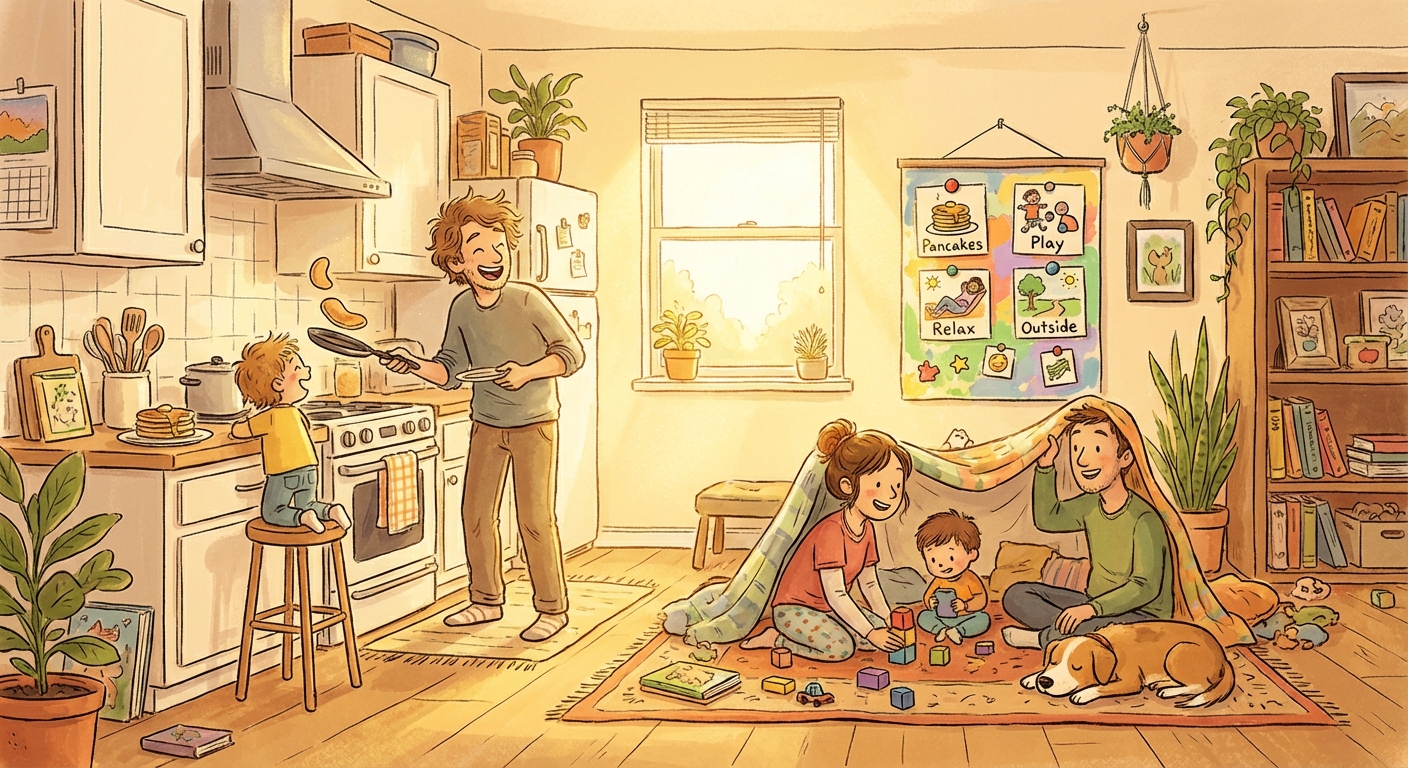

Friday has arrived and the temptation is great: throw the routine out the window and let chaos reign. But after a weekend without structure, Monday becomes a nightmare. Is there a middle ground?
The answer is yes — and the key is understanding the difference between routine (predictable sequence) and rigidity (inflexible schedules). You can have one without the other.
Why Some Structure Matters
A child's body works with circadian rhythms — internal cycles of approximately 24 hours that regulate sleep, hunger, and energy. When you drastically change schedules on the weekend, you're causing mini jet lag.
Research shows that variations of more than 1 hour in wake time affect mood and behavior the next day. That's why Monday after a 'free' weekend is so hard.
The 30-Minute Rule
A good guideline: keep wake and sleep times within 30 minutes of weekday times. So if your child wakes at 7am on weekdays, on the weekend it can be 7:30am, but not 9am.
This keeps the biological clock regulated while still offering that 'weekend' feeling.
Structure isn't the opposite of fun — it's what creates space for fun to happen without chaos.
Simplified Weekend Routine
You don't need the same detailed chart as the weekday. Create a simplified version with the day's 'anchors': wake up, main meals, nap (if applicable), bedtime. The rest can be flexible.
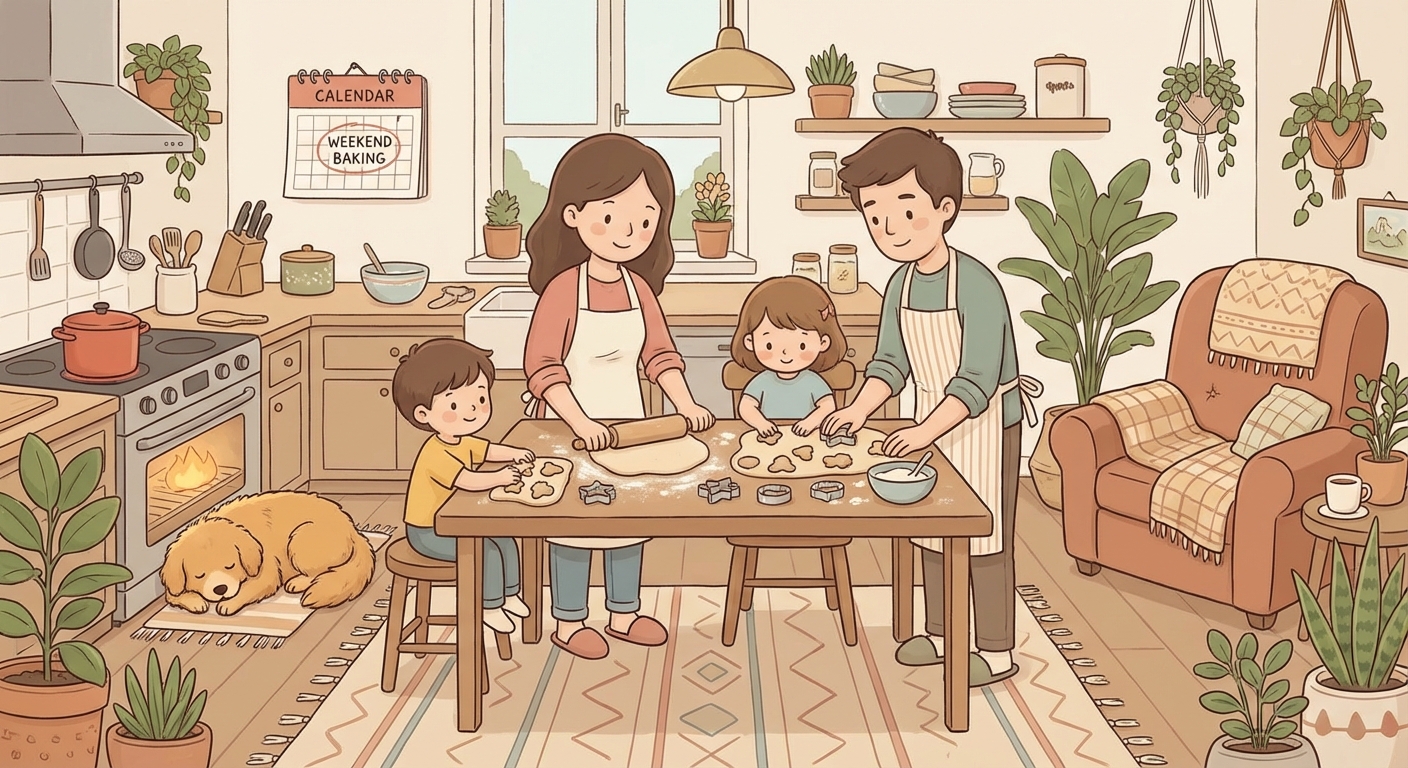
Create a separate 'weekend chart', simpler and with room for choices. Include a 'special activity' section that the family chooses together.
Weekend Rituals
Rituals are different from routines — they're traditions that create memories and connection. Some ideas:
- Special Saturday breakfast (pancakes, waffles)
- Sunday family outing
- Movie night with popcorn
- Cooking/art time together
- Group cleanup followed by reward
- Call to grandparents/distant family
When these rituals become predictable, the child anticipates them with joy — and they become part of the 'weekend routine' without feeling like obligations.
Balancing Free Time and Structure
Children need unstructured time to play freely, use imagination, and simply 'be'. Don't fill the entire weekend with scheduled activities.
A good ratio: 1/3 structured (meals, basic routines, one planned activity), 1/3 semi-structured (play with some direction), 1/3 free (child decides what to do).
Preparing for Monday
Sunday night is the most important transition. Some strategies:
- Return to normal bedtime on Sunday
- Prepare clothes and backpack before bed
- Resume the full nighttime routine (bath, story, etc.)
- Talk about what's coming in the week (without creating anxiety)
- Avoid very stimulating activities on Sunday night
The weekend is an opportunity for connection, rest, and fun — not a problem to be solved. With a little structure, you ensure Monday won't pay the price.