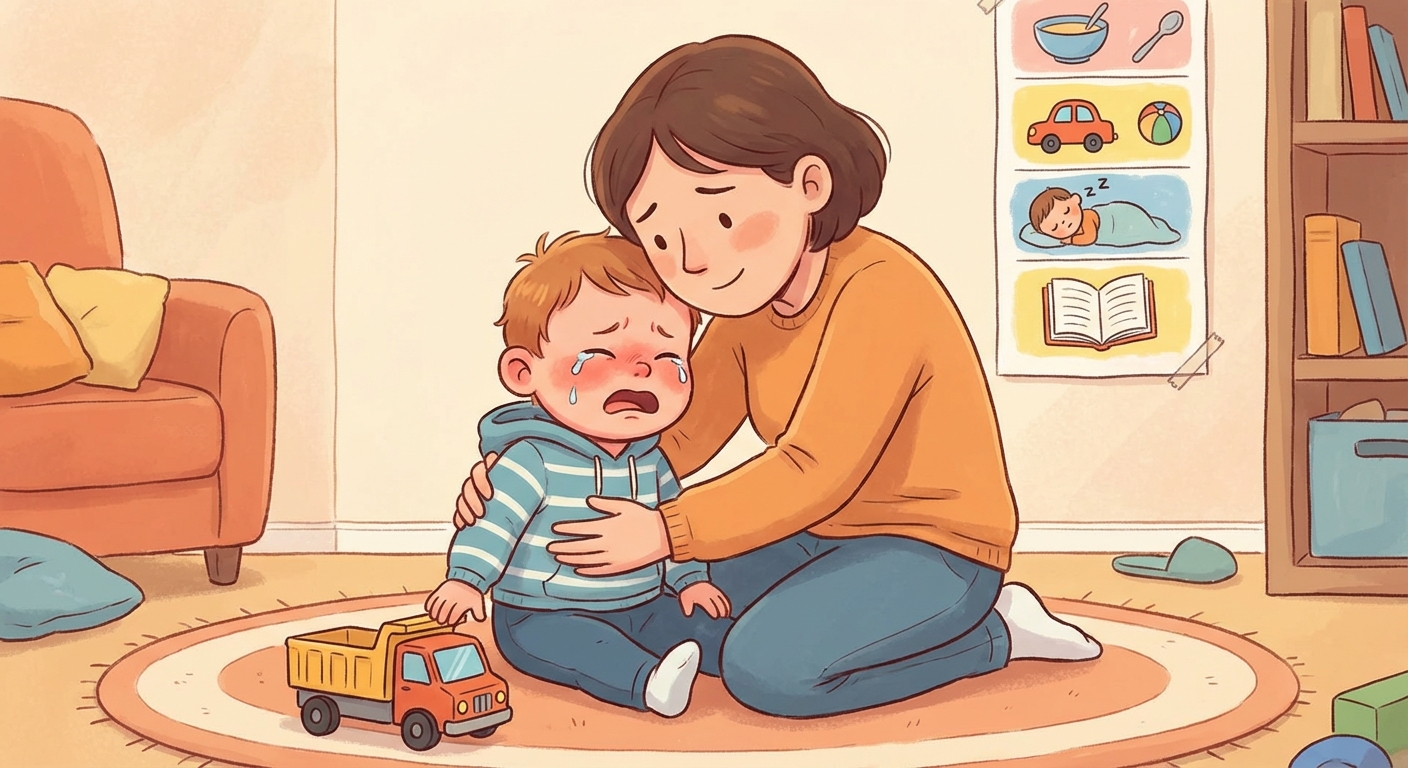
Your 2-year-old throws themselves on the supermarket floor, screaming. Your heart races, you feel the stares. Breathe: this is completely normal — and there are strategies that actually work.
Tantrums are an inevitable part of child development. Research shows that 87% of children between 18 and 24 months have regular tantrums. The peak happens between ages 2 and 3, gradually decreasing by 4-5 years old.
Why Tantrums Happen
Tantrums aren't manipulation or bad behavior — they're the result of a developing brain that can't yet regulate intense emotions. The prefrontal cortex, responsible for emotional control, only fully matures around age 25.
Common triggers include: hunger, tiredness, frustration from not being able to communicate, unexpected transitions, sensory overload, and the need for autonomy being blocked ('I want to do it myself!').
A tantrum is the language of a child who doesn't yet have words to express what they feel.
The Neuroscience of Emotional Regulation
During a tantrum, the amygdala (the brain's alarm center) is in full activity, while the prefrontal cortex (reason) is offline. That's why arguing or explaining during the crisis doesn't work — the child literally can't process it.
A child's brain learns to self-regulate through co-regulation with a calm adult. When you stay calm, you're literally teaching your child's brain how to return to balance.
Strategies During the Tantrum
- Stay calm: your nervous system regulates theirs
- Stay close: don't abandon, but don't force contact
- Validate the feeling: 'You're very angry because you wanted the cookie'
- Use few words: a brain in crisis doesn't process long sentences
- Offer physical safety: some need hugs, others need space
- Wait it out: the emotional wave peaks and naturally decreases
The Role of Visual Charts
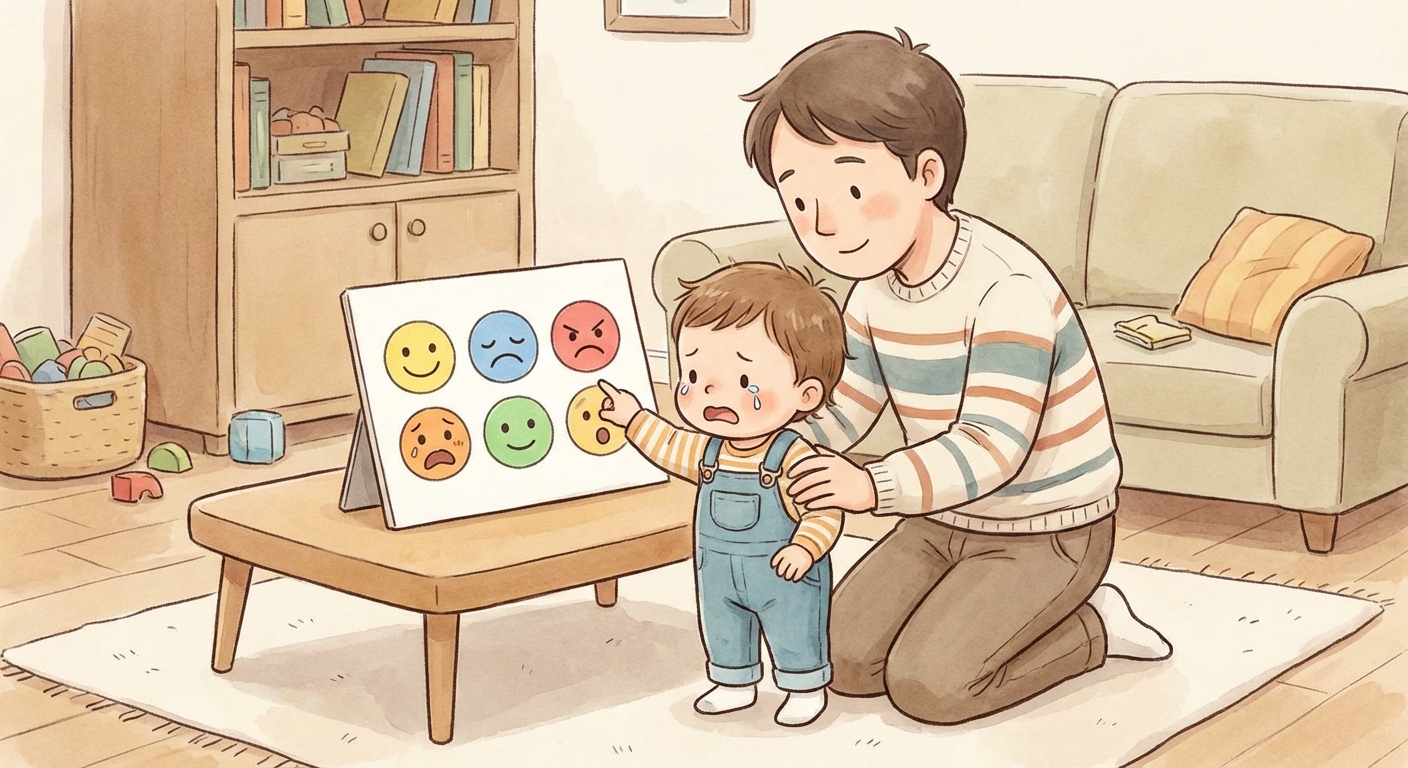
Visual routines reduce tantrums in two ways: preventing triggers (child knows what to expect) and offering a non-verbal communication tool. A 'feelings chart' can help the child point to how they feel before exploding.
Create a simple 'feelings chart' with 4-6 basic emotions (happy, sad, angry, tired, scared, calm). Use it during calm moments so the child learns to identify emotions.
Prevention: The Best Medicine
Most tantrums can be prevented by identifying and avoiding triggers:
- Keep sleep and eating schedules consistent
- Use visual routines to create predictability
- Give transition warnings ('in 5 minutes we're leaving the park')
- Offer limited choices to give sense of control
- Avoid high-risk situations when the child is tired/hungry
- Teach emotional vocabulary during calm moments
After the Storm
When the tantrum passes, connect before you correct. A hug, a 'that was hard, huh?' shows you're on their side. Only after, briefly, can you discuss what happened — if the child is old enough.
Don't hold grudges. Don't use the tantrum against the child later ('you were so bad at the store'). The child already feels bad for losing control. What they need is to know you're still there, loving them unconditionally.
Tantrums are exhausting, but they're also opportunities. Every time you help your child navigate an emotional storm safely, you're building neural connections that will last a lifetime.