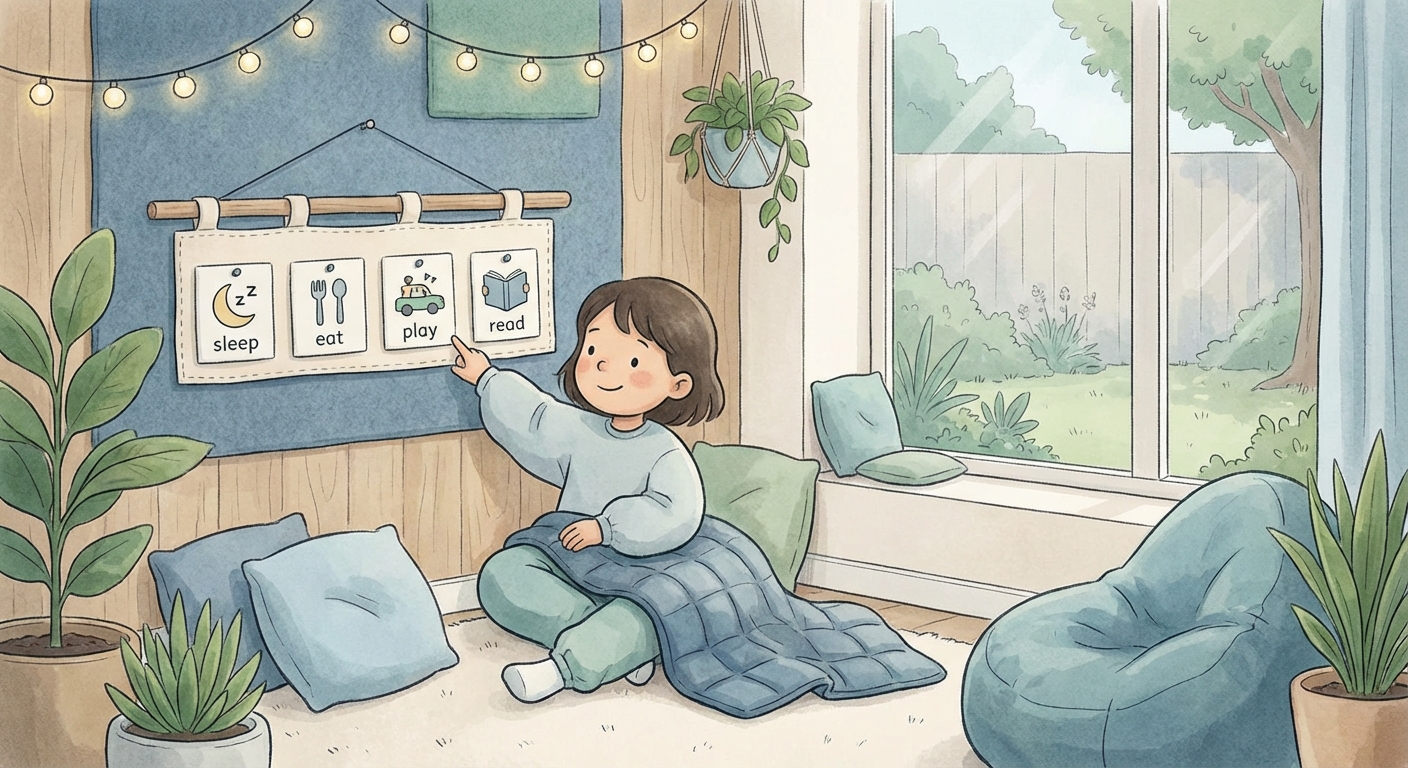

All children benefit from visual routines, but for children with sensory processing differences, they can be transformative. Visual predictability reduces anxiety and helps navigate a world that often feels overwhelming.
Atypical sensory processing is common in children with autism, ADHD, sensory processing disorder (SPD), and even in neurotypical children who are more sensitive. It's estimated that 5-16% of all children have some degree of sensory processing difficulty.
What is Sensory Processing
Our brain constantly receives and interprets information from the senses: sight, hearing, touch, smell, taste, plus proprioception (body awareness) and vestibular system (balance and movement).
Children with sensory differences can be hypersensitive (overly sensitive) or hyposensitive (under-responsive) to stimuli. Some are both, depending on the sense. This directly affects how they experience daily routines.
Common Sensory Challenges in Routines
- Bath: water temperature, soap texture, shower sound
- Dressing: tags, seams, 'wrong' fabrics
- Brushing teeth: brush texture, toothpaste flavor, sensation in mouth
- Eating: textures, temperatures, food colors
- Transitions: change in sensory environment can be overwhelming
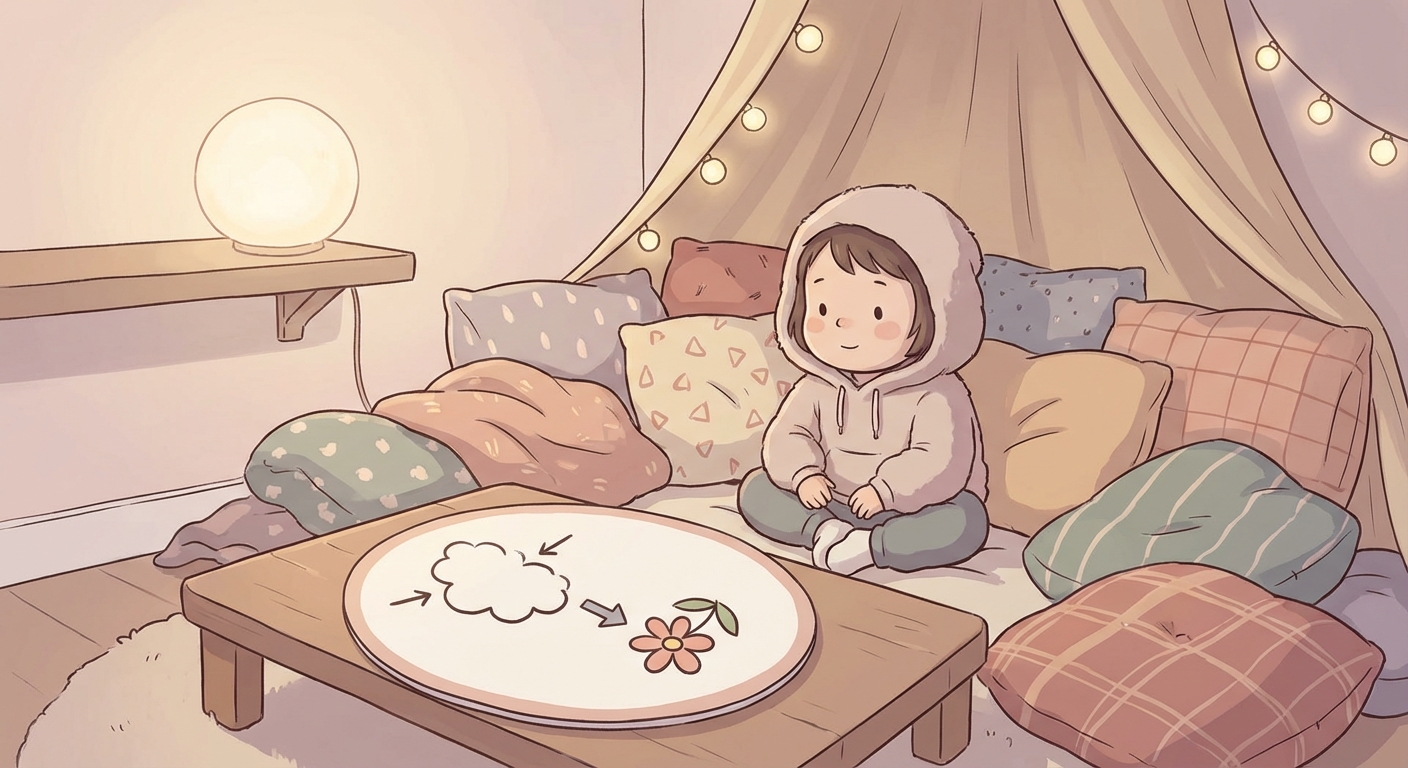
Adapting Routine Charts
For sensory children, routine charts need some adaptations:
Visual simplicity: less is more. Avoid busy backgrounds, many colors, or excessive visual information. Use soft colors and clean design.
Absolute consistency: the same image always for the same activity. Visual changes can be confusing.
Detail when necessary: some children need sub-steps (brush teeth might become: get brush, put paste, brush top, brush bottom, rinse).
Include 'sensory breaks' in the routine chart — planned moments for the child to regulate (5 minutes in the calm corner, jump on the trampoline, hug the weighted stuffed animal).
Sensory Support Tools
Beyond the routine chart, consider:
- Visual timer (hourglass or app) for transitions
- 'Energy level' or 'how I'm feeling' chart
- Sensory choice cards ('I need: hug / space / jump / dark')
- Visual sequence of calming strategies
- Tactile checklist (child can move or flip each item)
Creating a Sensory-Friendly Environment
The physical environment affects how the child experiences the routine:
- Lighting: avoid fluorescents, prefer natural or soft light
- Sound: reduce background noise, consider calm music or white noise
- Organization: less visual clutter means less overload
- Textures: have options (soft toothbrush, tagless clothes)
- Refuge space: a calm corner for when they need it
Working with Therapists
If your child has significant sensory challenges, an occupational therapist (OT) specialized in sensory integration can be a valuable resource. They can help identify your child's specific sensory profile and suggest personalized adaptations for routines.
Bring your routine chart to OT sessions — they can help adapt it for your child's specific needs.
Sensory children are often also deeply perceptive, creative, and intense children. The adaptations you make today aren't just about surviving routines — they're about creating an environment where your child can thrive.