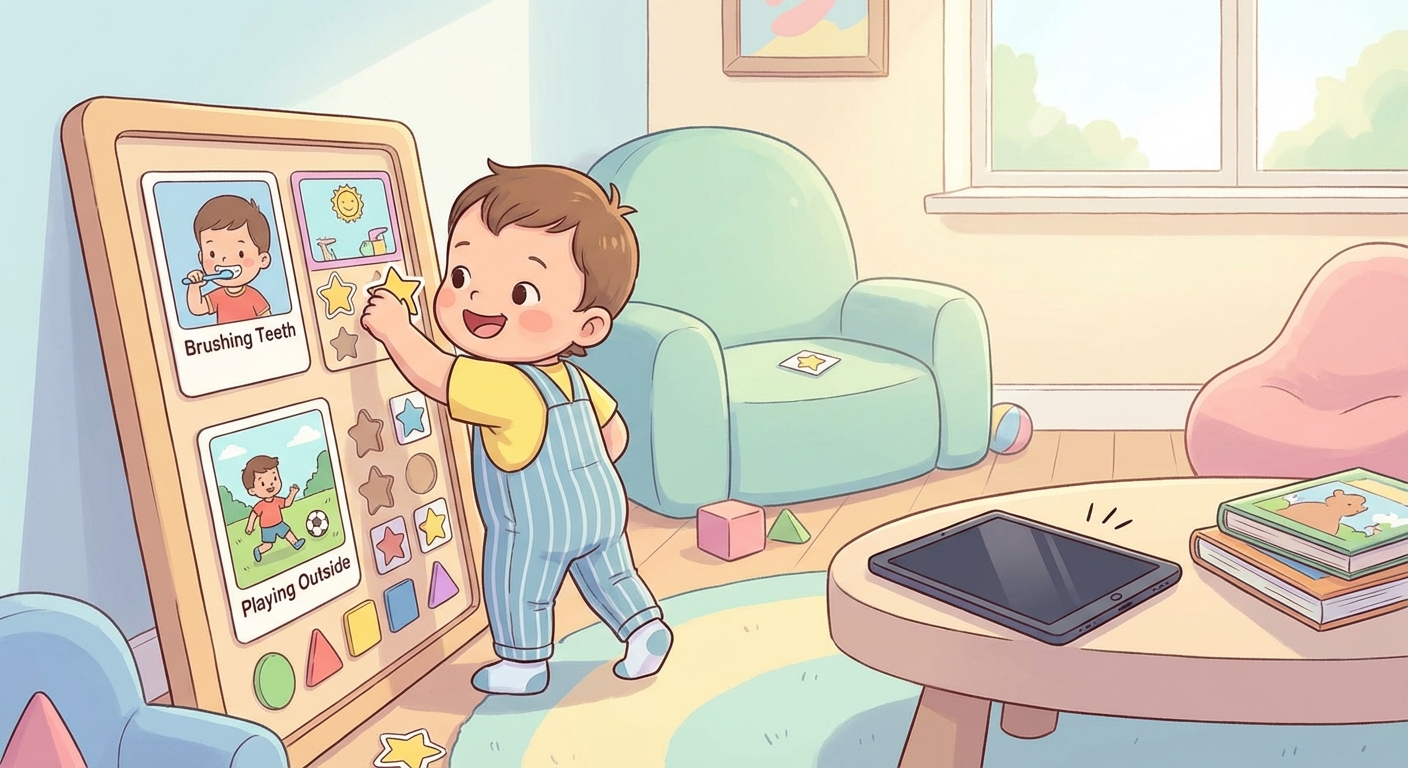

The battle to turn off the TV or take away the tablet is one of the biggest sources of conflict in families with young children. But there's a better way.
The Problem Isn't the Screen
Screens aren't villains — they're tools. The problem arises when we use screens as the only way to entertain or calm the child. This creates dependency and makes transitions brutal.
Visual Routines as a Substitute
A routine chart offers visual stimulation without screen problems. The child can look, interact, point — and the content is about their real life, not fictional characters.
- Use the chart as a 'check-in' when waking up and before bed
- Create a ritual of pointing to each completed activity
- Let the child decorate or personalize the chart
- Make the chart a 'game' with stars or stickers
When the child asks for screen time, offer interaction with the routine chart: 'Let's see what you've done today? How about putting up the stars?'
Smooth Transitions
Instead of 'turn that off now,' use the chart: 'Look, the next step is bath time. Do you want to turn it off or should I?' The chart provides predictability and the child feels they have some control.
The 'First/Then' Rule
A powerful technique: 'First we complete the morning routine, then you can watch 10 minutes of cartoons.' The visual chart shows exactly what 'first' means.