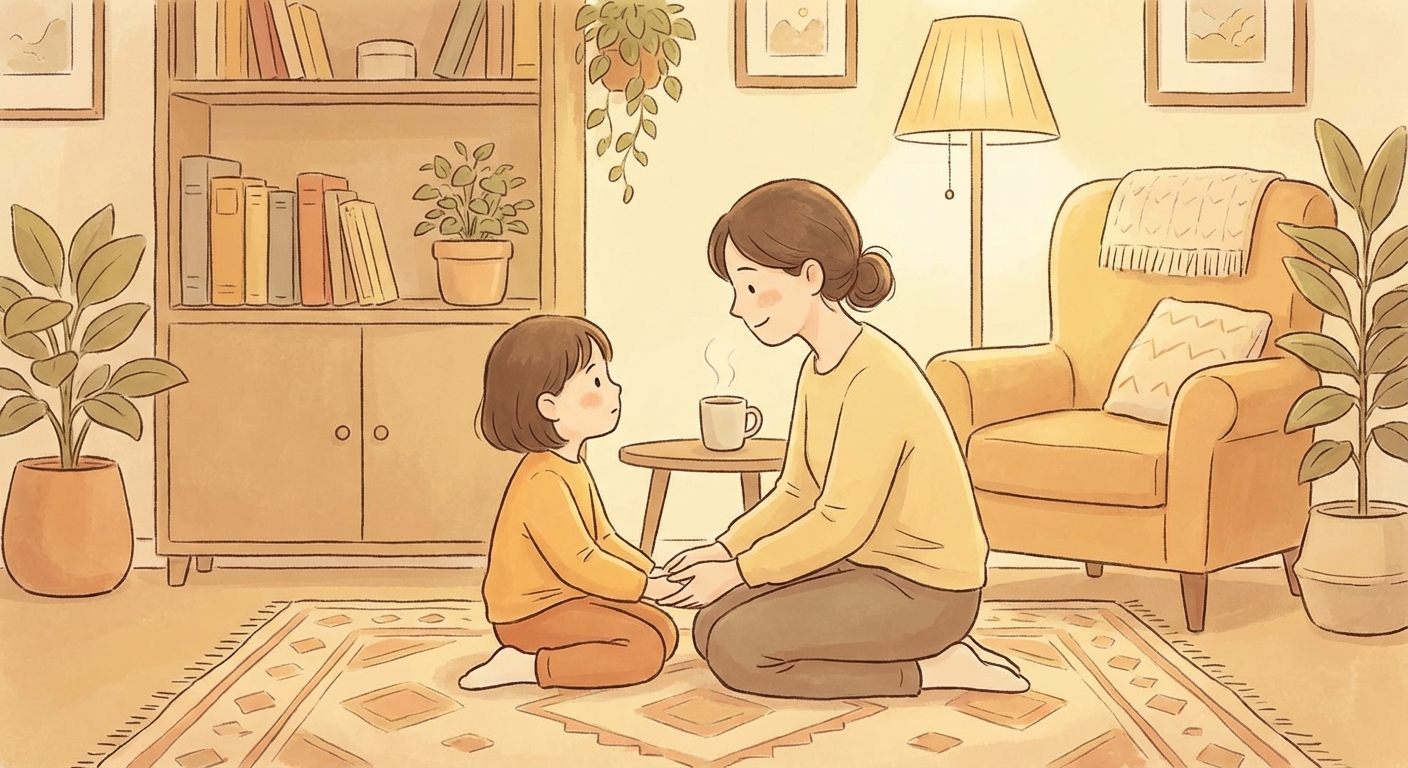
Discipline comes from the Latin 'disciplina', meaning 'teaching' or 'learning'. Somewhere along the way, we flipped it upside down and started associating discipline with punishment. It's time to return to the origins.
Positive discipline is a research-based approach that focuses on teaching desired behaviors, rather than just punishing undesired ones. It builds connection, not fear.
Why Punishment Doesn't Work Long-Term
Punishment can stop a behavior in the moment, but research shows it doesn't teach the alternative behavior, damages the parent-child relationship, increases aggression long-term, and teaches the child not to get caught, not to do right.
The American Academy of Pediatrics recommends against any form of physical punishment and suggests positive discipline strategies as a more effective alternative.
Children behave well when they feel well. Our job is to help them feel well, not bad.
The 5 Pillars of Positive Discipline
- Connection before correction: the child needs to feel safe to learn
- Mutual respect: firmness with kindness, without humiliation
- Focus on solutions: 'how can we solve this?' instead of 'why did you do this?'
- Teaching skills: every mistake is a learning opportunity
- Encouragement: strengthen the child's belief in themselves
Natural and Logical Consequences
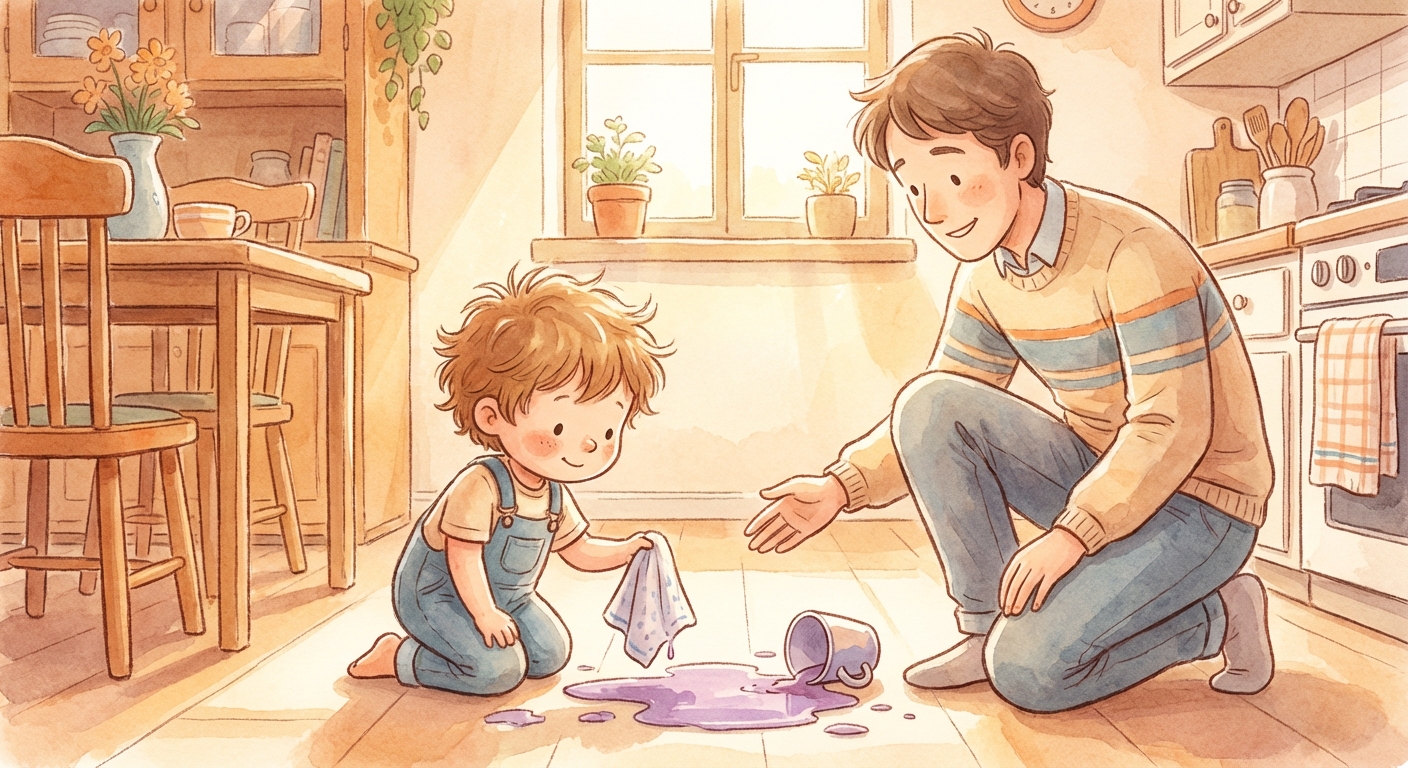
Natural consequences happen without adult intervention: doesn't eat → gets hungry. Logical consequences are created by the adult but have direct connection to the behavior: breaks the toy → doesn't have that toy anymore.
The difference between logical consequence and punishment is the connection. 'You hit your brother, so you're going to your room' is punishment (no connection). 'You hit your brother, so we're going to separate until you calm down and think about how to solve this' is logical consequence.
Practical Tools
Limited choices: 'Do you want to wear the blue shirt or the red one?' gives autonomy within limits.
Curious questions: 'What happened? How did you feel? What can you do differently?' instead of lectures.
Time together: many challenging behaviors are requests for attention. 10-15 minutes of full presence per day works wonders.
Family meetings: even with young children, discussing problems and solutions together teaches conflict resolution.
When you're about to yell or punish, ask yourself: 'Will this teach my child to do better or just to be afraid of me?'
Visual Routines as a Discipline Tool
Routine charts are positive discipline in action. They establish clear expectations, give autonomy to the child, create consistency, and remove you from the 'villain' role — the rule is on the chart, not in your head.
When the child resists, you can calmly point to the chart: 'What does our agreement say comes now?' This maintains firmness without creating personal conflict.
When You Mess Up
You will yell sometimes. You will lose patience. That's human. What matters is what you do after: acknowledge it ('I yelled and that wasn't nice'), apologize, and try again.
Modeling how to handle mistakes is one of the most valuable lessons you can give. Your child learns that making mistakes is part of life — and that it's possible to repair.