If morning is hard, night can be a real battle. But a well-structured bedtime routine changes everything — for the child and for you.
The Science of Child Sleep
Children need clear signals that it's time to sleep. The body releases melatonin in response to consistent routines. When the same activities happen in the same order every night, the body 'learns' to prepare for sleep.
Elements of a Good Bedtime Routine
- Bath: warm water relaxes and signals transition
- Pajamas: specific clothes = bedtime
- Brush teeth: hygiene + ritual
- Story: connection + stimulus reduction
- Calm music or prayer: closing the day
- Kiss and goodbye: separation with security
Consistency is more important than perfection. A simple routine done every night beats an elaborate routine done sometimes.
The Nighttime Chart
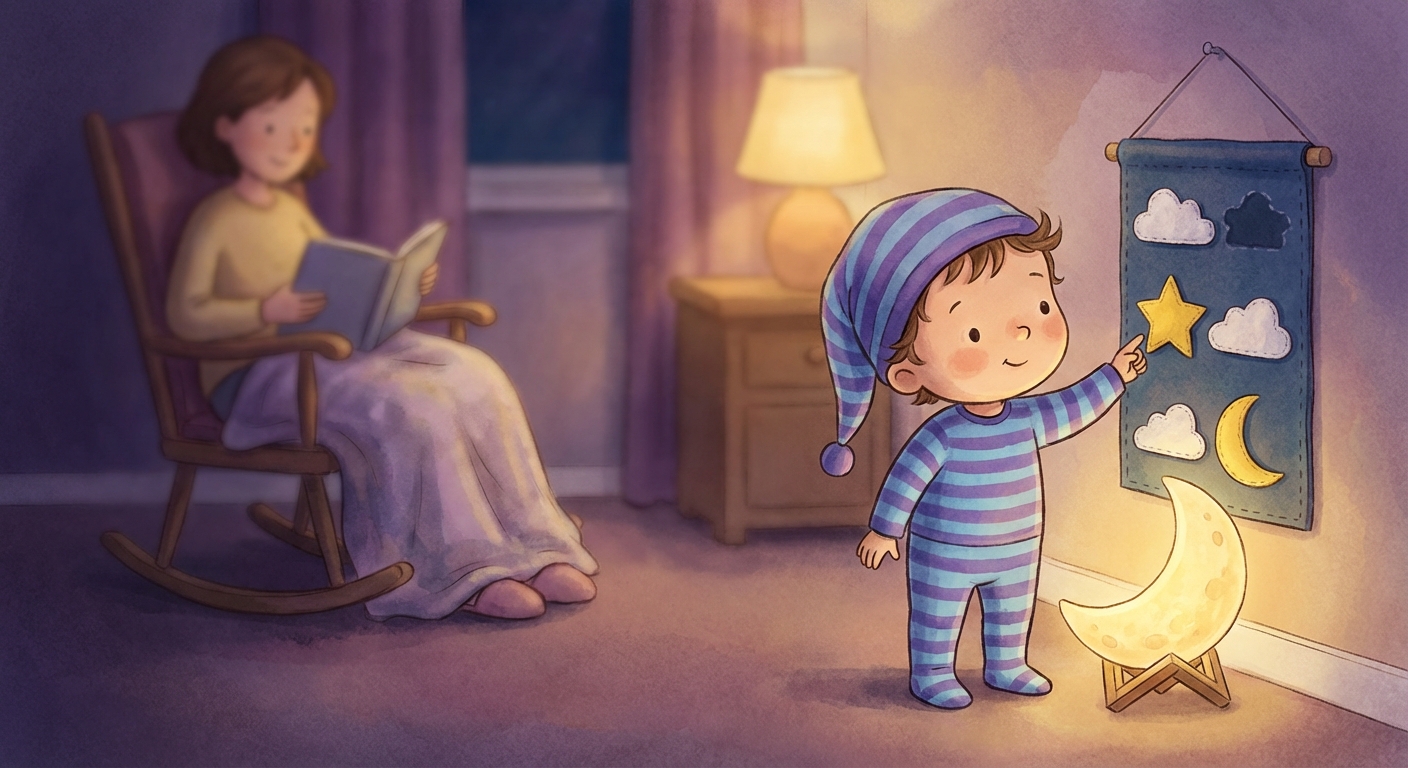
A specific bedtime routine chart helps the child visualize that the day is ending. They can 'turn off' or mark each step, which creates a sense of closure.
Place the nighttime chart in the child's room. They can look at it when waking up and remember the sequence for the next night.
Dealing with Resistance
When the child resists going to sleep, don't negotiate. The chart is the agreement. 'Look, we've done bath, pajamas, story. Now it's kiss and goodbye.' The visual structure reduces arguments.
Consistent Schedule
As important as the sequence is the schedule. The child's body regulates better when sleeping and waking at the same times, including weekends. Variations of more than 30 minutes confuse the biological clock.